

March 31, 2026
/
Strawberry Isn’t One Flavor. It’s a Release System
“Strawberry flavoring” can taste like fresh fruit in yogurt, then flip to candy in soda. Same label, totally different vibe. That’s not your palate being dramatic. Strawberry isn’t one flavor—it’s a release-and-perception system, and the matrix decides how it shows up.
The “same flavor” myth: the matrix rewrites the message
You don’t taste what’s in the tank. You taste what escapes into headspace and retronasal aroma as you eat or drink. The matrix controls which molecules get out, when, and how loud they feel.
Think of it like this: the formula may be the playlist, but the matrix is the speaker system. (And yes, it can absolutely ruin the bass.)

What’s happening in the chemistry: volatility, partitioning, binding
Strawberry flavoring is built from families of volatiles (fruity, fresh/green, creamy, floral) plus the non-volatile frame (sweetness, acids, texture). Three mechanisms do most of the rewriting:
Volatility
Fast movers create “top-note pop”; slow movers build “body.” Temperature, sweetness, and carbonation shift that timing.
Partitioning
Many strawberry volatiles prefer fat. More fat can smooth sharp edges and stretch strawberry flavoring over time; less fat can make the same profile hit earlier and feel more confectionery.
Binding/retention
Proteins, lipids, and carbs can hold aroma. Higher protein can mute delicate top notes; higher viscosity can delay release; polyphenols (common in fruit preparations and some plant systems) can push fruit perception drier and more astringent.
Timing matters. Early bright lift reads “fresh.” Delayed lift reads “jammy.” (Your strawberry didn’t “change.” Your release curve did.)
Aroma–taste interaction: why strawberry can taste sweeter than it is
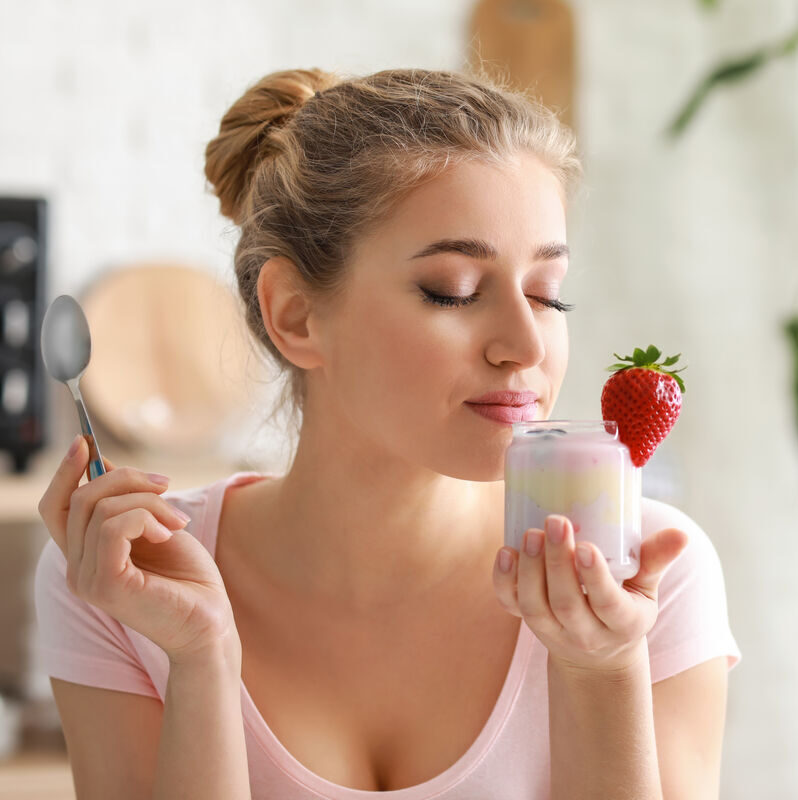
Aroma doesn’t just add smell; it can increase perceived sweetness/fruitiness through learned associations. Certain strawberry-associated volatiles are “sweet-coded” in the brain—hit retronasally at the right moment, and sweetness seems higher even when sugar isn’t.
This is one reason sugar reduction can cause chaos. In 2024, more than half of new global food and beverage launches carried some form of sugar-related positioning (reduced sugar, no added sugar, or lower sweetness), per Euromonitor. When sugar drops, viscosity and aroma release change—so strawberry can drift from fruit to candy.
A useful benchmark: technical sensory work shows that congruent “sweet” aroma additions (often in the tens to low-hundreds of ppm range, depending on system) can drive measurable sweetness lift in reduced-sugar products. Before you add more sweetener, make sure aroma timing is doing its share.
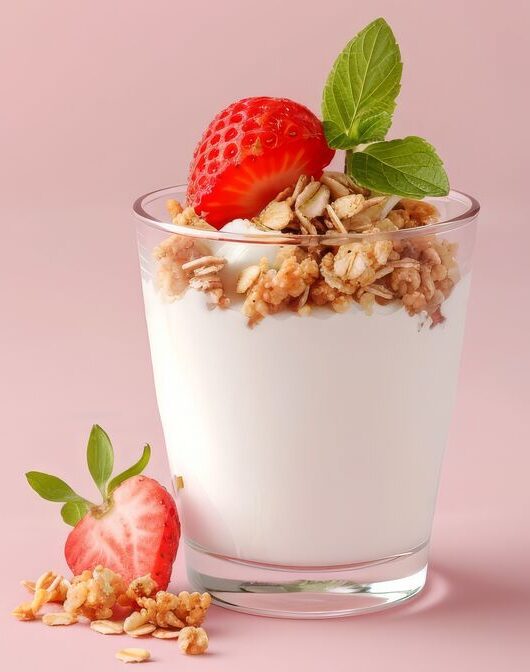
Yogurt levers: fat, protein, viscosity, fermentation acidity
Yogurt is full of aroma speed bumps. Four knobs matter most:
Fat level
Buffers fast top notes and rounds fruit. Lower fat can expose a “candy spike.”
Protein type
Different proteins retain aroma differently; higher protein can suppress freshness unless you rebuild lift.
Viscosity
Thicker matrices slow diffusion and delay release, pushing “jammy/cooked.”
Fermentation acidity
Lactic tang can sharpen “fresh” or turn “green” if the profile leans too aldehydic.
Scenario #1: you reformulate a yogurt to low-fat/high-protein and tighten texture. Strawberry flavoring suddenly goes candy-perfumey. Often the fix isn’t dosage—it’s a yogurt-specific profile that stays bright under retention and doesn’t spike when fat is reduced.
And the matrix landscape keeps shifting: in North America, dairy-alternative drinks account for 64% of milk launches (Innova Market Insights). So strawberry frequently has to perform in new protein/fat systems that behave nothing like traditional dairy.
Soda levers: acid profile, carbonation effects, sweeteners, top-note lift
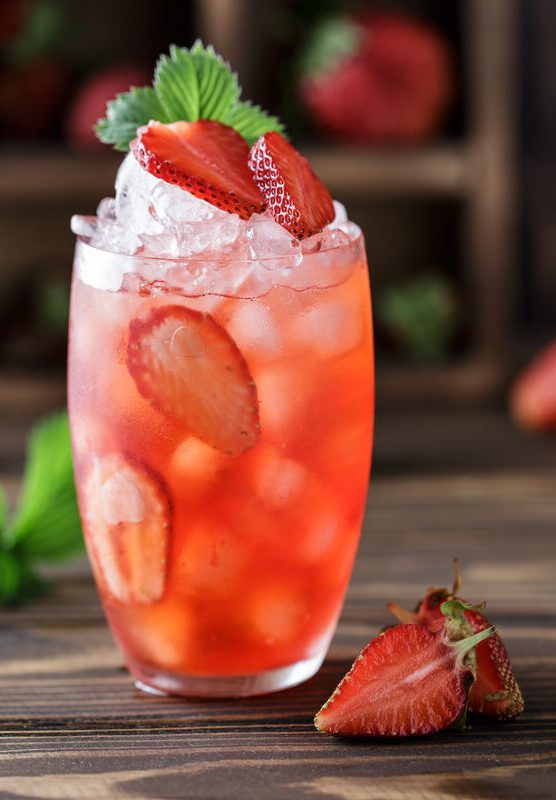
Soda is a volatility playground: low viscosity, high aroma transport, and a constantly refreshed headspace.
Acid profile
sets the “brightness frame.” The wrong acid balance can push strawberry toward “hard candy.”
Carbonation
adds bite and changes perception. Controlled sensory work on carbonated beverages has found that adding CO₂ can decrease sweetness perception, increase sourness perception, and enhance aroma perception—making strawberry feel louder and less sweet at once.
Sweetener choice
removing sugar changes mouthfeel and can introduce lingering notes that clash with fruity esters. This matters at scale: in 2020, global volume consumption of reduced-sugar soft drinks reached 31.6 billion units, up 3% from 2019 (Euromonitor).
Top-note lift
soda magnifies whatever top notes you built—fruity can become candy; aldehydic can become green; floral can become perfumey. (Soda is not subtle. It has never been subtle.)
Scenario #2: you take a carbonated soft drink and launch a still version with the same flavor load. The still drink tastes flat and jammy. You removed bubble-driven lift and the sensory “spark,” so you need to rebuild timing—not just turn the knob up.
Practical playbook: match strawberry to product architecture
Dairy/cultured
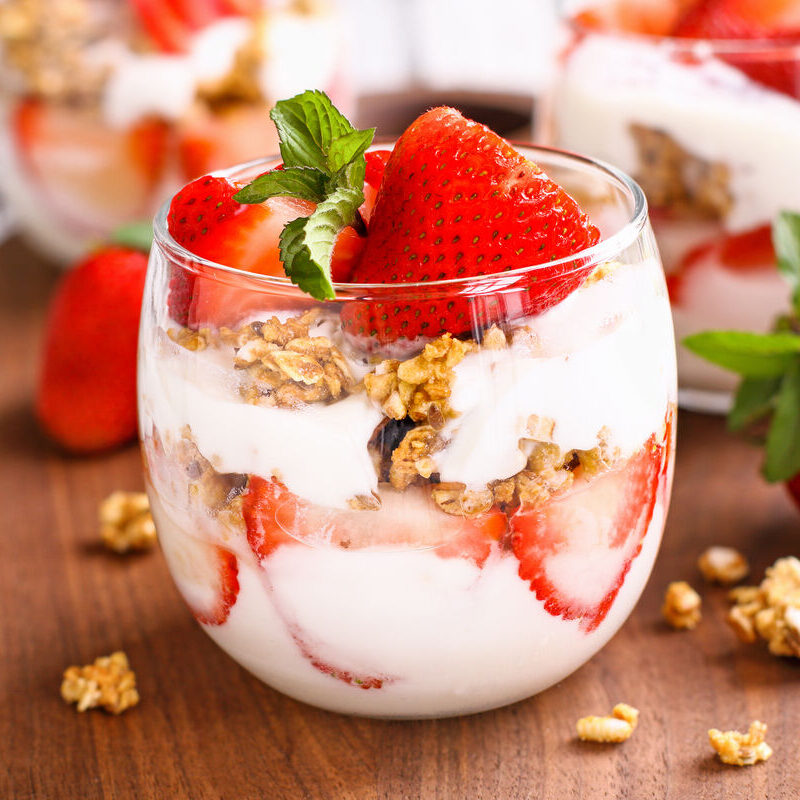
design for balanced release—freshness that survives retention (protein/viscosity) plus roundness that prevents spikes.
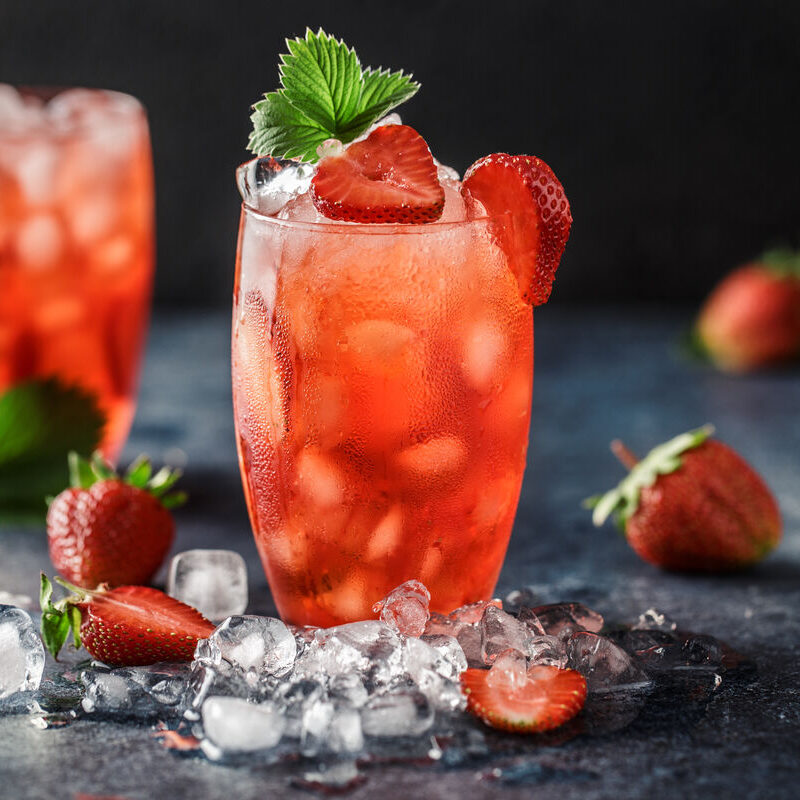
CSD
design for controlled top-note lift, assuming CO₂ will amplify aroma and shift sweet/sour perception. Validate with your exact sweetener system.
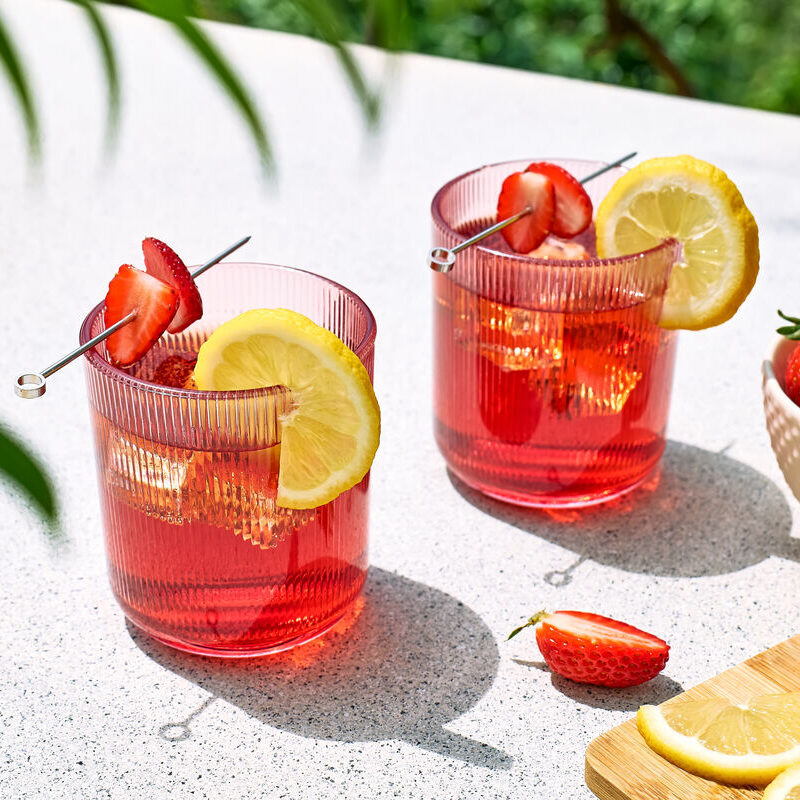
Still beverage
build intentional lift without bubbles; watch “jammy drift” when adding fiber/hydrocolloids.
Quick checks: headspace at 30 seconds vs. 5 minutes, cold vs. ambient, and at least two viscosity points if texture is moving.
Practical playbook: match strawberry to product architecture
Fresh: early bright lift + clean acidity + sweet-coded support.
Jammy: delayed release (viscosity/protein retention) + muted top; add earlier lift/brightness.
Candy: fast fruity esters dominating (often amplified by CO₂ or low fat); slow the spike, add complexity.
Green: aldehydes exposed by acidity/low sweetness support; rebalance with riper notes.
Perfumey: floral exposed when fruit body is suppressed (retention, sweetener linger); reinforce fruit body and reduce lingering floral.

R&D takeaways
- Build a matrix-specific strawberry library (not one “hero” strawberry).
- Treat viscosity + protein/fat system as flavor parameters, not just texture.
- Use aroma-driven sweetness enhancement strategically before adding sugar.
For more matrix-first flavor breakdowns, visit Flavor Industry Insights & Trends (the insights hub).
One last reminder: consumers expect strawberry to behave. In one US consumer snapshot, 38% picked strawberry as their top choice in premixed cocktails and flavored malt beverage flavors (Innova Market Insights). So when the label says “strawberry,” your matrix has to deliver the right strawberry flavoring.
Insights & Trends
Beyond Pumpkin Spice: Building Occasion Flavors
October 14, 2026

Premium, Complex… or Medicinal?
September 28, 2026
The Scoville Scale Is Losing the Plot
September 14, 2026

Why the Second Sip Gives Your Sweetener Away
August 28, 2026
When “Naturally Sweet” Gets Complicated
August 11, 2026
The “Protein Problem”
July 29, 2026
Lemon-Lime Lost Its Monopoly
July 14, 2026

Coffee’s Next Frontier
June 22, 2026
Maximalism, Refined: Why Bigger Flavor Is Getting Smarter
June 12, 2026
Spice Without Pain
May 29, 2026
Botanicals Take the Lead
May 14, 2026
Color Talks Before Flavor Does
April 28, 2026
From “Asian-Inspired” to Region-True
April 13, 2026

Strawberry’s Not Moody—Your Formula Is
March 31, 2026

Dessert Déjà Vu, Upgraded
March 12, 2026

Cravings, Rewired: The Science of Shifting Taste
February 26, 2026
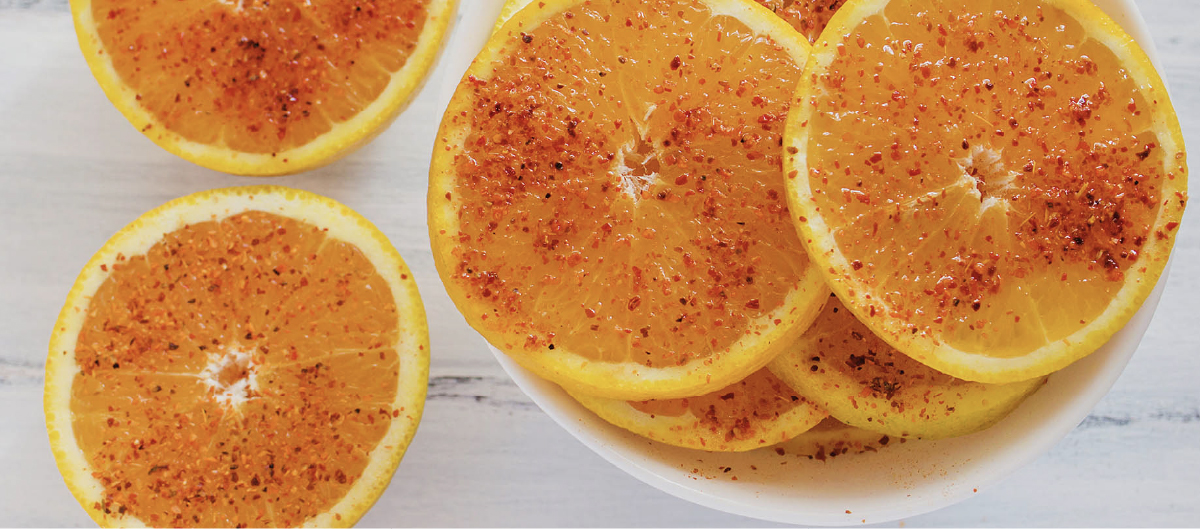
Swicy, but Make It Fruit
February 12, 2026

Nostalgia Flavors
January 28, 2026
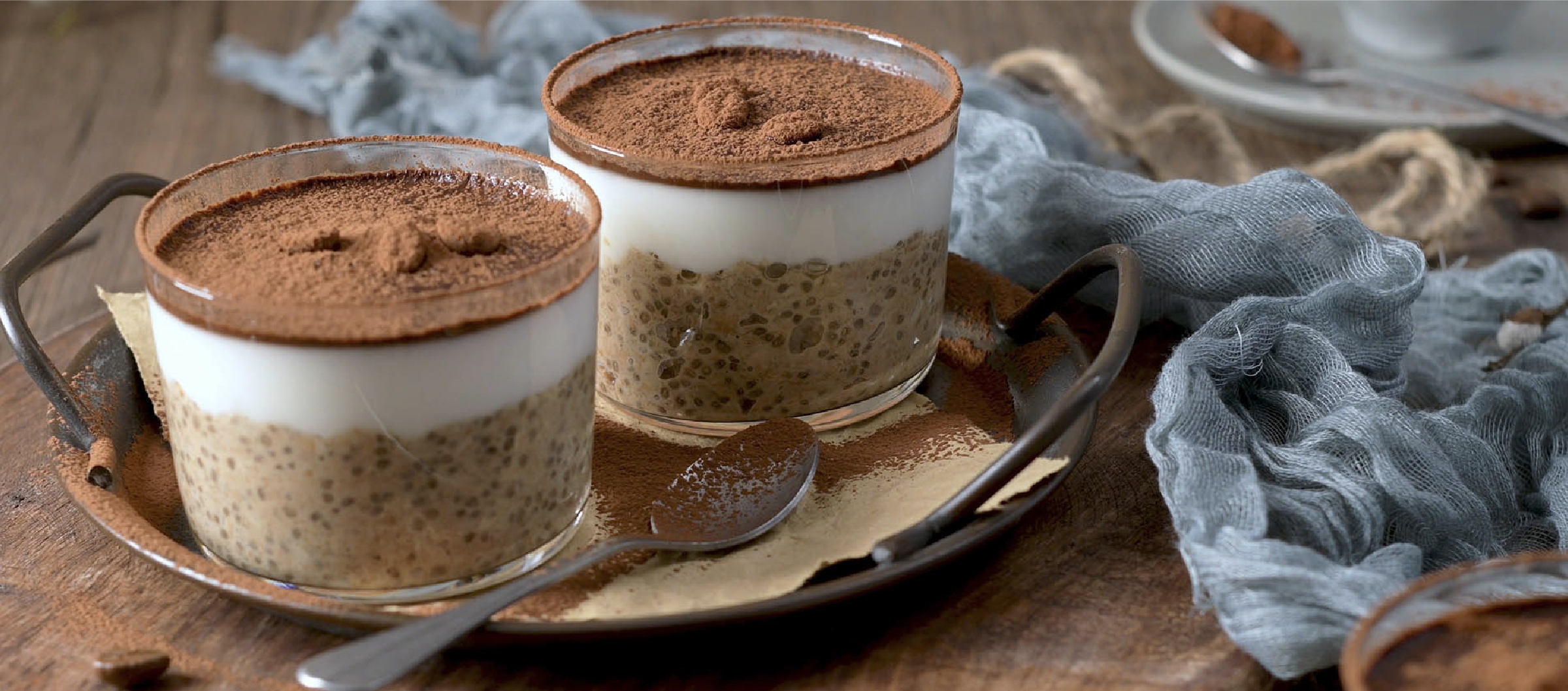
Stack Attack
January 13, 2026
The Aftertaste Ambush
January 1, 2026
View All Blog Posts